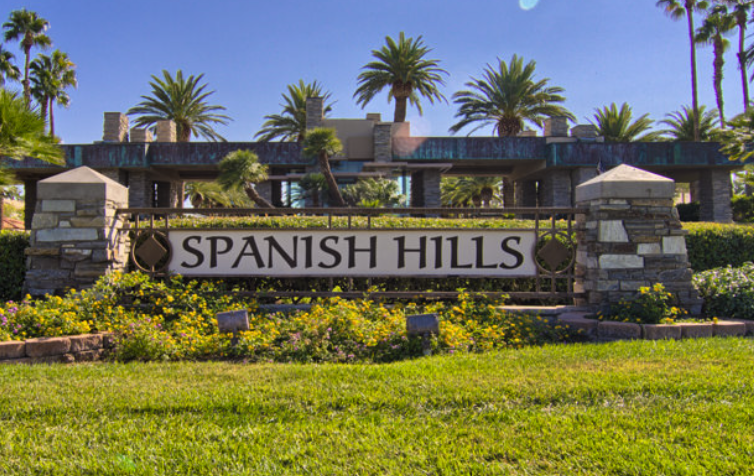
Spanish Hills – Spring Valley, Nevada Community Guide
Spanish Hills is often associated with a more upscale residential profile in the Spring Valley and southwest-west valley conversation. It tends to attract attention from buyers who want a polished setting, larger or more premium-feeling homes, and a stronger sense of separation from more routine tract neighborhoods.
Neighborhood feel and first impression
The feel of Spanish Hills is generally more private, more polished, and more intentional than many everyday subdivisions. For some buyers, this creates an aspirational environment that still keeps them connected to useful west-valley roads and conveniences.
When people relocate, they usually do not choose a neighborhood based on one feature alone. They are trying to picture normal life there: morning traffic, evening quiet, parking, how well the streets are maintained, whether the homes feel close together or spread out, and whether the area feels more established or more recently built. That first impression becomes especially important in Spring Valley because communities can vary widely even within a short drive.
Housing character and streetscape
Housing character often leans toward larger homes, stronger curb presence, and a more elevated residential image. That does not mean every property feels the same, but the overall tone tends to appeal to buyers who want more visual presence and a less entry-level neighborhood feel.
In communities around Spring Valley, the housing mix can change quickly from one block to the next. Some streets have larger lots and mature landscaping, while others offer attached options or more compact homes that are easier to maintain. This matters for buyers and renters because curb appeal, privacy, HOA rules, and price point often follow the style and age of the homes.
Shopping, dining, and routine convenience
Despite its residential polish, day-to-day convenience still matters. Residents typically want to know where the closest groceries, services, fitness options, and dining corridors are, and how quickly they can move around the southwest valley from here.
For many people, convenience is one of the top reasons to consider Spring Valley. A neighborhood may look good online, but the real question is how easy it is to live there every day. Good local content should help people visualize repeated trips such as school drop-offs, groceries, coffee stops, the gym, the park, and the freeway on-ramp.
Commute and valley access
Commute value depends on the specific section and your destination, but the area often benefits from useful southwest road access. Test routes before deciding because premium-feeling neighborhoods can still vary in practical convenience.
Spring Valley’s location gives many neighborhoods reasonable access to the rest of the valley, but commute quality still depends on which side of the community you are on. A subdivision close to an arterial can feel more convenient for work and errands, while a deeper interior location may feel quieter. This trade-off is important for families, hospitality workers, office professionals, healthcare workers, and business owners who cross town often.
Parks, schools, and day-to-day livability
People moving to Spanish Hills usually want more than a home. They want a routine that works. Nearby parks, walking paths, sports fields, libraries, recreation centers, and school options all shape the daily experience. Even when school assignment is not your top priority, school traffic, crossing patterns, and family activity still influence the character of a neighborhood.
The best way to use this kind of community guide is to pair it with exact-street research. Check where the nearest park or grocery store is, how school traffic affects key intersections, and whether the neighborhood feels more active or more private during the times you will actually use it.
What to check before choosing this area
Before you choose Spanish Hills, drive the area during weekday and weekend hours. Check entry and exit routes, parking conditions, nearby commercial activity, street lighting, internet options, HOA requirements if applicable, and the feel of the nearest shopping centers. If you are buying, review recent sales, monthly HOA dues, and how the surrounding streets compare. If you are renting, compare lease terms, pet rules, parking, and commute times.
It is also wise to compare more than one property within the same community. Many people assume that once they like a neighborhood name, every home inside it will feel equally good. In reality, proximity to an entrance, park, commercial edge, or major road can change the experience.
Who this community may fit best
Spanish Hills may fit buyers looking for a more upscale residential setting, stronger curb appeal, and a community that feels more removed from busier central corridors while remaining practical.
A good relocation guide should not say every area is perfect for everyone. The better approach is to help people match the neighborhood to their own priorities such as budget, pace of life, home style, proximity to schools, or access to dining and entertainment.
Helpful links for this area
Frequently Asked Questions
Is Spanish Hills considered upscale?
It is commonly viewed as a more upscale residential area within the broader west and southwest valley discussion.
What kind of buyer may like Spanish Hills?
Buyers looking for stronger curb appeal, privacy, and a more elevated neighborhood feel often consider it.
Is Spanish Hills only for luxury buyers?
The exact housing mix should be compared carefully, but overall it is usually associated with a more premium residential image.
What should I verify before moving?
Check exact location, HOA details if applicable, maintenance expectations, and whether the practical convenience matches the visual appeal you want.
Educational notice: This guide is informational. ZIP code, school zoning, HOA rules, neighborhood boundaries, and community descriptions can change or overlap. Always verify important details with official sources, service providers, and licensed professionals before making a move decision.
Related Spring Valley Pages
Use these internal links to explore nearby topics and compare Spring Valley neighborhoods, ZIP codes, and move-planning resources.
Be in the Spotlight!

springvalleylocal.com is a local, educational guide created for people who want to better understand what life in Spring Valley is really like before they move. From neighborhoods and schools to healthcare, parks, business services, and everyday amenities, this site brings together practical local information in one easy-to-navigate place.